

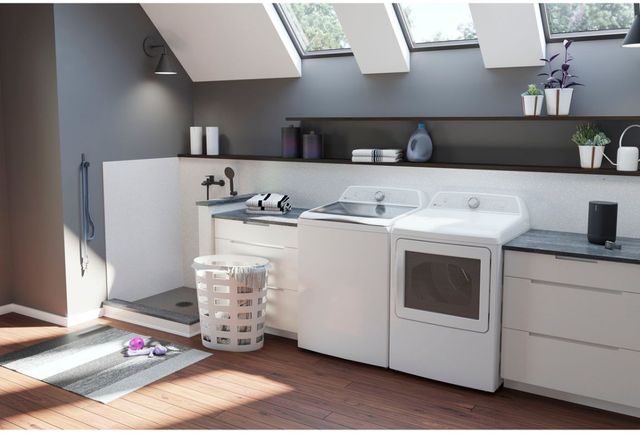
Standing in the appliance aisle between two washers, one that opens from the front and one from the top, it is genuinely hard to tell which one actually suits how your household does laundry. The tags list capacities and cycle counts, the salesperson is nowhere in sight, and the decision feels like a coin flip with a lot of money riding on it. Choosing between a front door vs top door washing machine does not have to be guesswork, because the right pick comes down to a few clear factors about your habits, your space, and your priorities.
Find Your Ideal Washer at Appliance Center
Compare front load and top load washers side by side in our showroom with expert guidance. Professional installation and local service from our team.
At Appliance Center, we help homeowners cut through the confusion and match the washer to their real laundry needs. This guide compares front load and top load washers on cleaning performance, efficiency, ergonomics, and maintenance, then lays out which fits which household. By the end, you will know exactly how to choose between a front door vs top door washing machine with confidence.
Key Takeaways
- Different mechanics: In the front door vs top door washing machine choice, front loaders tumble clothes while top loaders use an agitator or a high-efficiency impeller.
- Front loaders clean gently: Tumbling cleans thoroughly and is easier on fabrics, while agitators can be harder on delicates.
- Efficiency favors front load: Front loaders typically use less water and energy, lowering running costs over time.
- Weigh ergonomics and upkeep: Top loaders load at waist height with less maintenance, while front loaders need gasket care.
Front Load vs Top Load Washing Machines: The Core Differences
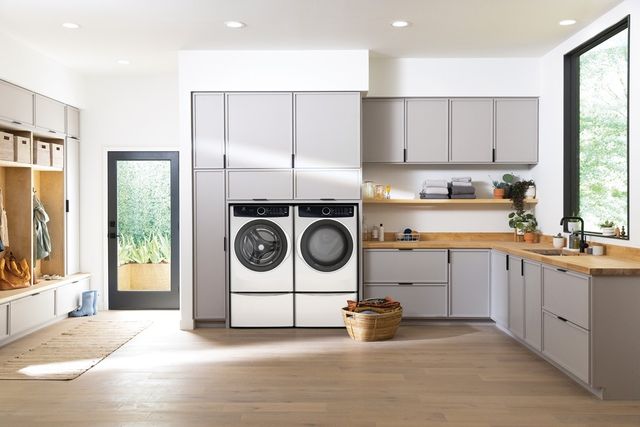
The fundamental difference in the front door vs top door washing machine debate is how each cleans your clothes. A front load washer uses a horizontal drum that tumbles laundry through the water, lifting and dropping it repeatedly. A top load washer cleans in one of two ways: with a central agitator that twists clothes around, or with an impeller, a low-profile plate or cone that rubs clothes against each other.
Understanding these mechanisms clarifies the whole comparison:
- Front load tumbling: Gravity does the work as the drum rotates, cleaning gently and using less water since the clothes do not need to be fully submerged.
- Top load with agitator: The tall central post moves clothes vigorously, a traditional design known for fast, aggressive cleaning.
- Top load with impeller: A high-efficiency design without a tall agitator, gentler than an agitator and more water-efficient.
Here is the content gap many articles miss: not all top load washers have agitators anymore. High-efficiency (HE) top-load models use impellers instead, and these behave more like front loaders in their gentler cleaning method and lower water use. So the choice is not simply front versus top, but really about tumbling, agitating, or impeller cleaning.
This matters because an HE impeller top loader bridges the gap, offering some front-loader efficiency with top-loading convenience. Knowing the mechanical differences behind a front door vs top door washing machine sets you up to weigh cleaning, efficiency, and convenience accurately, which the following sections break down in detail.
Cleaning Performance and Fabric Care Compared
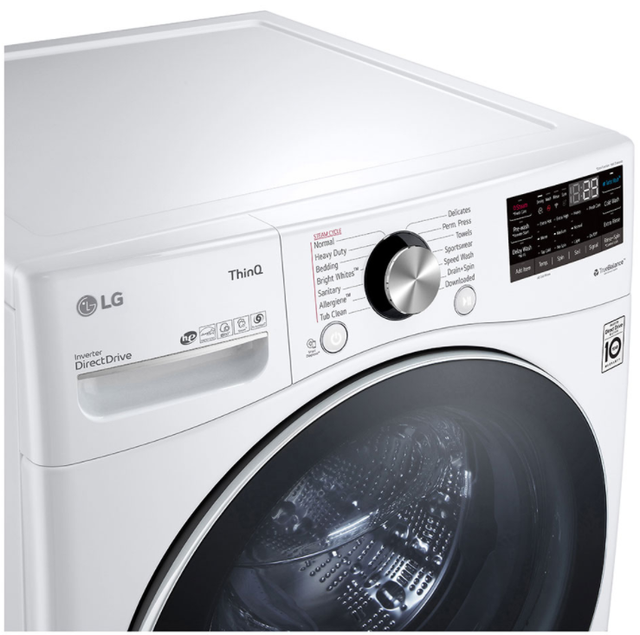
When it comes to getting clothes clean without wearing them out, the front door vs top door washing machine comparison shows real differences. Front load washers generally provide more thorough cleaning through their tumbling action, which works detergent through fabrics gently but effectively. Agitator top loaders clean aggressively, which handles heavy dirt well but can be harsher on delicate fabrics over time.
Rather than a generic front load cleans better claim, it helps to look at specific fabric and garment types where one type has a clear edge:
- Bulky bedding and comforters: Front loaders excel, since the roomy drum with no central agitator lets large items tumble freely and get evenly cleaned.
- Delicate activewear and fine fabrics: Front loaders and impeller top loaders are gentler, preserving stretch and fibers, while an agitator can stress delicate materials.
- Heavily soiled work clothes: Agitator top loaders can power through tough dirt quickly with their vigorous action.
- Everyday mixed loads: All types handle these well, though front loaders tend to extend fabric longevity with gentler care.
Fabric longevity is a real consideration. The gentler tumbling of a front loader causes less wear over years of washing, so clothes and linens last longer, which matters for anyone investing in quality garments.
For a household that washes a lot of bedding, delicates, or activewear, a front loader's thorough yet gentle cleaning is a clear advantage. For those who frequently battle heavy dirt and want fast, aggressive cleaning, an agitator top loader has appeal. Matching the cleaning method to what you actually wash is central to choosing the right front door vs top door washing machine, and the efficiency comparison next adds another key factor.
Water and Energy Efficiency: Which Washer Costs Less to Run
Running costs add up over the life of a washer, and efficiency is where the front door vs top door washing machine comparison often tips. Front load washers are generally more water and energy efficient than agitator top loaders. Because they tumble clothes through a shallow pool of water rather than filling a full tub, they use significantly less water per load, and less water means less energy to heat it.
ENERGY STAR certification reflects this trend, with front loaders and HE impeller top loaders more likely to earn the rating than traditional agitator models. An ENERGY STAR certified washer meets strict efficiency standards that translate to lower utility bills.
Here is a practical framework for estimating long-term savings based on your laundry frequency, rather than vague percentage claims. Consider how many loads your household runs per week:
- Light use (three to four loads a week): The efficiency gap saves a modest amount yearly, but it still adds up over the washer's decade-plus lifespan.
- Moderate use (five to eight loads a week): A typical family sees meaningful annual water and energy savings with an efficient front loader.
- Heavy use (nine or more loads a week): Large families and high-volume households save the most, since every efficient load compounds the savings.
The more laundry you do, the faster an efficient front loader's savings offset its typically higher purchase price. Over ten to fifteen years of ownership, those savings can be substantial for a busy household.
If lowering utility bills is a priority and you run frequent loads, a front load washer's efficiency is a strong point in its favor. Factoring your household's laundry volume into the running-cost math gives you a truer picture than the sticker price alone when choosing a front door vs top door washing machine.
Ergonomics and Ease of Use: Loading, Unloading, and Accessibility
Daily comfort matters, and the front door vs top door washing machine choice has real ergonomic differences that affect how pleasant laundry is to do. A front load washer requires bending down to load and unload at floor level, while a top load washer loads at waist height, which many people find easier on the back.
For households with elderly members, back concerns, or mobility limitations, this difference is significant:
- Top load convenience: Waist-height loading means no bending, and you can drop in a forgotten sock mid-cycle on many models.
- Front load bending: Reaching into a low drum can strain the back, though this is solvable.
- Pause-and-add feature: Many modern front loaders include a pause-and-add-a-garment feature, closing part of the convenience gap with top loaders.
Here is the practical solution many articles fail to mention: washer pedestals. A pedestal riser lifts a front load washer roughly a foot off the floor, raising the door to a comfortable height and largely eliminating the bending downside. Pedestals often include a storage drawer too. For a household that prefers a front loader's efficiency and cleaning but worries about bending, a pedestal is an excellent fix.
Accessibility considerations round this out. For someone with significant mobility limitations, a top loader's waist-height access or a front loader raised on a pedestal both improve usability, and ADA-friendly appliance options exist for specific needs. Weighing the ergonomics of a front door vs top door washing machine, along with solutions like pedestals, makes sure the washer you choose is comfortable to use every day, not just efficient on paper.
Maintenance, Mold Prevention, and Long-Term Durability
Long-term ownership brings maintenance realities, and here the front door vs top door washing machine comparison has an important distinction. Front load washers are more susceptible to gasket mold and odor, because the door seal that keeps water in can trap moisture and detergent residue, creating an environment for mildew. Top load washers, with their simpler mechanical design and the drum draining downward, are generally less prone to this and often praised for straightforward durability.
The good news, which most competitor content omits, is that the mold issue is very manageable with a few simple habits:
- Leave the door open: Prop the front loader door ajar between cycles so the drum and gasket dry out instead of staying sealed and damp.
- Run a monthly cleaning cycle: Use a washer cleaning cycle or a tub-clean setting monthly to clear residue and buildup before odor develops.
- Wipe the gasket: Periodically wipe down the door gasket and use the correct amount of HE detergent to prevent residue that feeds mold.
Follow these steps and a front loader stays fresh and odor-free for years. Owners who neglect them are the ones who report problems, so the fix is knowledge, not luck.
On durability, both types can last well over a decade with proper care. Top loaders' simpler design gives them a reputation for mechanical reliability, while front loaders reward the small maintenance routine with long, efficient service. Understanding the maintenance realities of a front door vs top door washing machine, and knowing the mold issue is easily preventable, lets you choose based on what fits your life rather than fear of upkeep. The comparison table below summarizes all these factors at a glance.
Choosing the Right Washer Capacity and Fit for Your Home
Beyond cleaning and efficiency, getting the capacity and physical fit right is essential when choosing a front door vs top door washing machine, since a washer that is too small means constant loads and one that does not fit your space is a non-starter. Matching size to your household and laundry area makes sure the washer works for your life.
Consider these capacity and fit factors:
- Match capacity to household size: A couple or small household does well with around 4.0 to 4.5 cubic feet, while a large family benefits from 4.5 to 5.3 cubic feet or more to handle bulky loads and reduce the number of cycles.
- Measure your laundry space: Record the width, height, and depth of the area, and confirm door swing clearance, since front loaders need room for the door to open outward.
- Consider stacking: Front load washers can typically be stacked with a matching front load dryer using a stacking kit, a major space-saver for closets and small laundry rooms. Top loaders cannot be stacked because they load from the top.
- Check delivery access: Measure doorways, hallways, and stairwells to make sure the washer can reach the laundry area on delivery day.
Stacking is a decisive factor for tight spaces. If your laundry area is a narrow closet, a front load washer and dryer that stack vertically may be the only configuration that fits, giving front loaders a clear edge for small-space homes. A top loader needs clearance above for the lid to open, so it requires a wider, more open footprint.
Thinking through capacity and fit alongside cleaning and efficiency completes the picture. A large family in a spacious laundry room might prioritize a big-capacity washer of either type, while an apartment dweller may need a stackable front load set to fit the space at all. Considering how much laundry you do and where the washer will live makes sure your front door vs top door washing machine choice fits both your household and your home, and our team can help you measure and plan.
Front Load vs Top Load Washing Machine: Side-by-Side Comparison
Seeing the two types side by side clarifies the trade-offs. The table below compares them on the factors that drive the decision.
| Factor | Front Load Washer | Top Load Washer |
|---|---|---|
| Water usage | Lower, uses less per load | Higher on agitator models |
| Energy efficiency | High, often ENERGY STAR | Moderate to high on HE models |
| Average cycle time | Longer | Shorter, especially agitator |
| Cleaning performance | Thorough and gentle | Aggressive on agitator, gentle on impeller |
| Loading height | Bends to floor level | Waist-height loading |
| Typical price range | Higher upfront | Lower to mid |
Read more:
- Best Furniture for a Small Living Rooms: 7 Top Picks
- How to Choose the Best Home Appliances for Your Kitchen in 2026
Choosing between a front load and top load washer involves trade-offs that depend on your household. Here's the balanced view before you decide.
Front Load Washer Pros
Thorough yet gentle
Cleans thoroughly yet gently, protecting fabrics over time.
Efficiency
Uses significantly less water and energy, lowering utility bills.
Space-saving
Stacks with a dryer to save floor space in tight laundry areas.
Faster drying
Higher spin speeds extract more water, so clothes dry faster.
Front Load Washer Cons
Maintenance
Needs gasket care and a monthly cleaning cycle to prevent odor.
Higher cost
Typically costs more upfront than a comparable top loader.
Top Load Washer Pros
Ergonomics
Loads at waist height with no bending, easier on your back.
Speed
Often runs shorter cycles, so laundry gets done faster.
Less maintenance
Simpler design means lower maintenance and less mold risk.
Lower cost
Generally cheaper to buy and easier to repair.
Top Load Washer Cons
Fabric wear
Agitator models can be harder on delicate fabrics.
Efficiency
Uses more water and energy per load than a front loader.
Read more:
Top Washing Machines to Shop at Appliance Center
This is the only section where we recommend specific models. The washers below span front load and top load, agitator and impeller, so you can match the type and features to your household. Our showroom team can help you compare them in person.
LG 5.0 Cu. Ft. White Front Load Washer WM4200HWA
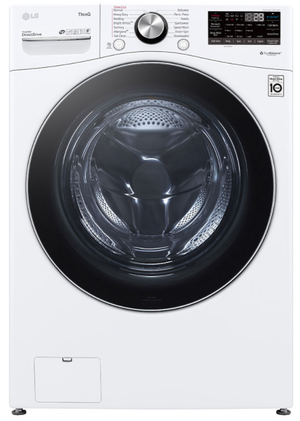
This LG front load washer offers a large 5.0 cubic foot capacity and efficient, gentle tumbling for thorough cleaning. The roomy drum handles bulky bedding and big family loads with ease, and LG's efficient design keeps water and energy use low. It stacks with a matching LG dryer for tight spaces. For a household that wants spacious capacity, gentle fabric care, and strong efficiency in a front load washer, this LG model is an excellent choice that delivers dependable performance and lowers running costs over years of laundry.
Top Features
- Capacity: Large 5.0 cubic feet.
- Efficiency rating: Efficient front load design.
- Cycle options: Multiple cycles for varied loads.
- Smart connectivity: Smart features available.
GE 4.8 Cu. Ft. White Smart Front Load Washer with UltraFresh Vent System
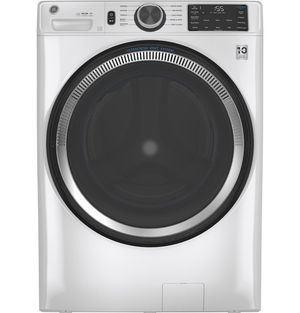
This GE front load washer pairs a 4.8 cubic foot capacity with the UltraFresh Vent System, which helps combat the moisture and odor front loaders are known for, a smart built-in defense. Smart connectivity lets you monitor cycles from your phone, and the efficient design keeps utility costs down. For a household that wants front load efficiency and gentle cleaning with proactive odor prevention and smart features, this GE model is a standout choice that directly addresses the main maintenance concern of front loaders while delivering excellent everyday performance.
Top Features
- Capacity: Roomy 4.8 cubic feet.
- Efficiency rating: Efficient front load design.
- Cycle options: Smart cycle options.
- Smart connectivity: WiFi-enabled with UltraFresh Vent System.
Electrolux 4.5 Cu. Ft. White Front Load Washer ELFW7437A
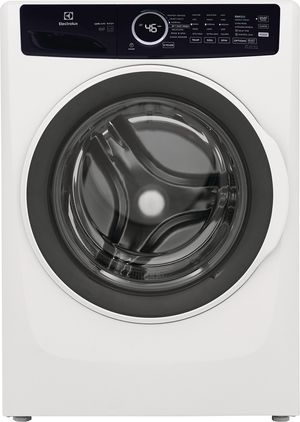
This Electrolux front load washer offers 4.5 cubic feet of capacity with the brand's reputation for gentle, thorough fabric care. Electrolux washers are known for premium cleaning and steam options that refresh and de-wrinkle clothes, and the efficient design keeps running costs low. It stacks with a matching dryer for compact spaces. For a household that wants premium fabric care, efficient operation, and refined performance in a front load washer, this Electrolux model is an excellent choice that treats clothes gently while delivering the efficiency benefits of front loading.
Top Features
- Capacity: 4.5 cubic feet.
- Efficiency rating: Efficient front load design.
- Cycle options: Steam and specialty cycles.
- Smart connectivity: Advanced cycle options.
GE Profile 4.9 Cu. Ft. White Agitator Top Load Washer
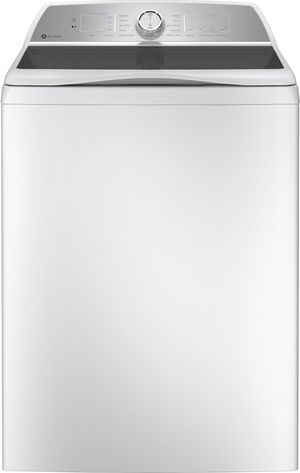
This GE Profile agitator top load washer offers a large 4.9 cubic foot capacity and the powerful, aggressive cleaning that agitator models are known for. The waist-height loading means no bending, and the agitator powers through heavily soiled loads quickly. Smart features add convenience. For a household that prefers top loading for its ergonomic convenience and wants strong cleaning power for tough dirt, this GE Profile model is a great choice that combines generous capacity, effective agitator cleaning, and the no-bend convenience many shoppers value in a top load washer.
Top Features
- Capacity: Large 4.9 cubic feet.
- Efficiency rating: Efficient agitator design.
- Cycle options: Multiple wash cycles.
- Smart connectivity: Smart features available.
LG 5.3 Cu. Ft. Alpine White 4-Way Agitator Top Load Washer with EasyUnload and AI Sensing
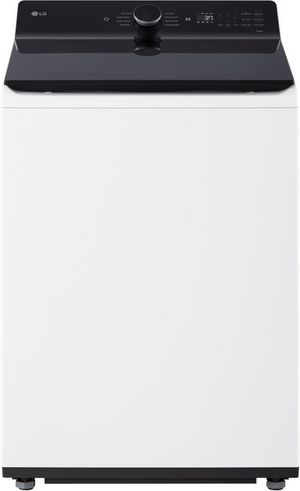
This LG top load washer boasts a huge 5.3 cubic foot capacity with a 4-way agitator, EasyUnload to help move wet laundry, and AI Sensing that optimizes each cycle. The large drum and powerful agitator handle big family loads and tough dirt, while the waist-height loading adds convenience. For a large household that wants maximum capacity, powerful cleaning, and smart features in a top load washer, this LG model is an outstanding choice that combines generous size, effective agitator action, and modern conveniences for busy laundry rooms.
Top Features
- Capacity: Huge 5.3 cubic feet.
- Efficiency rating: Efficient agitator design.
- Cycle options: AI Sensing cycle optimization.
- Smart connectivity: Smart features with EasyUnload.
Samsung 4.4 Cu. Ft. White ActiveWave Agitator Top Load Washer
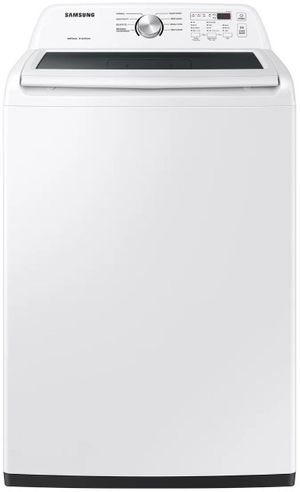
This Samsung top load washer features a 4.4 cubic foot capacity and the ActiveWave agitator, designed to reduce vibration and noise while still delivering effective cleaning. The waist-height loading offers no-bend convenience, and the reliable performance handles everyday family laundry well. For a household that wants dependable top load convenience with quieter, effective agitator cleaning at a great value, this Samsung model is a practical choice that balances capacity, performance, and the ergonomic ease of top loading, making it a solid everyday workhorse for the laundry room.
Top Features
- Capacity: 4.4 cubic feet.
- Efficiency rating: Efficient agitator design.
- Cycle options: Multiple wash cycles.
- Smart connectivity: ActiveWave vibration reduction.
Front Door vs Top Door Washing Machine: Make the Right Call
Choosing between a front door vs top door washing machine comes down to your priorities: front loaders win on gentle cleaning, efficiency, and stacking for tight spaces, while top loaders offer waist-height convenience, shorter cycles, and simpler maintenance. Match the type to how much laundry you do, what you wash, and your space, and you will get a washer that fits your life.
When you are ready to upgrade your laundry room, visit Appliance Center. As an independent local retailer, we offer expert showroom guidance, professional installation, and local customer service that big-box competitors cannot match. Stop by or reach out today and find your ideal washer.
Frequently Asked Questions about Washing Machines
A front load washer is better for gentle, thorough cleaning and efficiency, while a top load washer is better for waist-height convenience and shorter cycles. The best choice depends on your laundry habits, space, and priorities.
Yes, front load washers generally use less water than agitator top load washers because they tumble clothes through a shallow pool rather than filling a full tub. High-efficiency impeller top loaders also use less water than agitator models.
Front load washers can get moldy because the door gasket traps moisture and detergent residue. Prevent it by leaving the door open between cycles, running a monthly cleaning cycle, and wiping the gasket with the correct HE detergent amount.
Yes, top load washers load at waist height, which reduces bending and is easier for people with back problems. A front load washer raised on a pedestal also improves loading height and eases back strain.
Top load washers, especially agitator models, generally have shorter wash cycle times than front load washers. Front loaders run longer cycles as part of their efficient, gentle cleaning process.
Only front load washers can be stacked with a matching front load dryer using a stacking kit. Top load washers cannot be stacked because they load from the top and need clearance for the lid.
Why Trust Appliance Center?
Appliance Center is a trusted destination for quality home solutions, offering top appliances, mattresses, and furniture to help you upgrade every room in your home. Our commitment is simple: deliver reliable products, competitive pricing, and exceptional customer service.
Shop Furniture & Mattresses at Appliance Center
At Appliance Center, the customer always comes first. Our knowledgeable team is ready to help you find everything you need for your home with ease and confidence.