

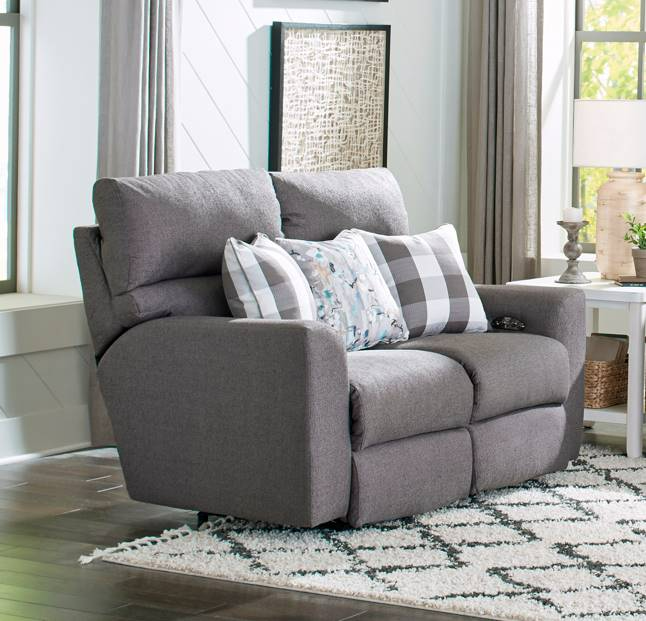
Three years in, the footrest on the end everyone fights over needs a two-handed shove to come up and a knee to put it back down. The seat cushion on that same end has flattened into a permanent bowl that you can feel through the fabric, and every time someone leans back during a movie the mechanism lets out a metallic clunk that everyone in the room now expects. Nothing has technically broken. The frame is intact, the motor still runs on the other side, and the upholstery looks fine from across the room. What failed is everything you could not see when you bought it, which is exactly why choosing a reclining sofa on looks and price is such an expensive habit.
Sit in It Before You Buy It
Appliance Center has been furnishing northwest Ohio and southeast Michigan homes since 1953, with showroom floors full of reclining sofas you can actually sit in, recline, and compare. Our own delivery teams handle setup, and our service department is local when a mechanism eventually needs attention.
Encouragingly, the difference between a reclining sofa that lasts three years and one that lasts fifteen comes down to a handful of construction details you can check yourself in a showroom in about five minutes. At Appliance Center, our furniture specialists walk Toledo area families through those checks constantly, because a sofa that gets used every evening in a busy household is a different purchase from one that sits in a formal living room. This guide covers what actually makes a reclining sofa durable, power versus manual mechanisms, upholstery choices for real households, the brands known for longevity, sizing and clearance, care and warranty, a comparison table, honest trade-offs, and the models on our floor.
Key Takeaways
- The mechanism is the most common failure point: Steel gauge, welded joints, and cycle testing determine how long a reclining sofa works, and that is the component you can least see and most need to evaluate.
- Power and manual solve different problems: Power offers infinite positioning and real accessibility benefits, while manual is simpler with fewer components that can fail.
- Upholstery should be chosen for the household, not the showroom: Bonded leather peels on high-contact surfaces, performance fabric handles pets and children, and top grain leather rewards maintenance.
- Reclined depth is the measurement people forget: Every reclining sofa has two footprints, and planning for only the closed one is how a sofa ends up unable to open fully.
What Makes a Reclining Sofa Durable
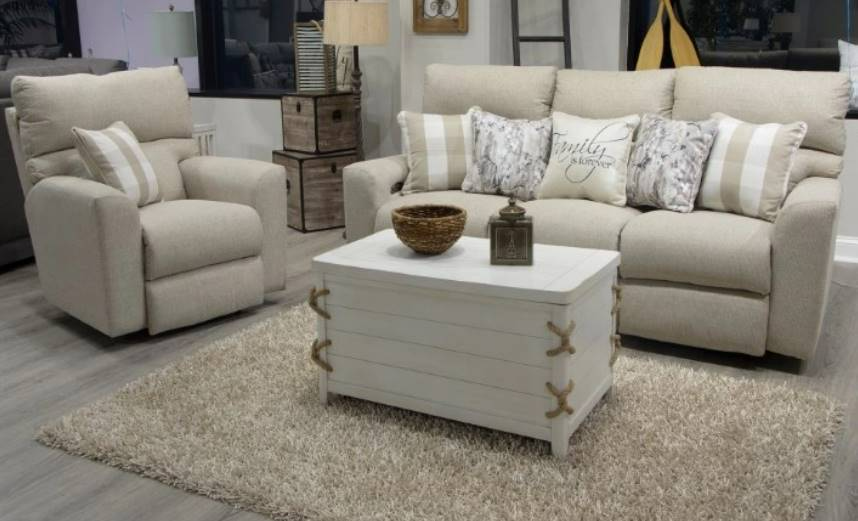
Durability is built from the inside out, and the layers stack in a specific order: frame, suspension, cushion core, recline mechanism, and upholstery. A weakness in any one of them limits the whole piece, and the cheapest way to hit a low price is always to weaken the layers a shopper cannot see.
Frame Construction
Kiln-dried hardwood is the standard to look for. Drying the lumber before assembly removes moisture that would otherwise cause the wood to shrink, twist, and loosen its joints over the years. Engineered hardwood and quality plywood perform well too, particularly in reclining furniture where dimensional stability matters. Particleboard is where problems start, because it holds fasteners poorly and fails at stress points.
Joinery tells you as much as the material. Look for corner blocks glued and screwed into place, doweled or interlocking joints, and fasteners at every stress point. A frame held together primarily with staples is not built for a decade of a family dropping into it.
Suspension and Cushion Cores
Suspension is what supports you between the frame rails:
- Sinuous steel springs: S-shaped wires running front to back, the most common system in motion furniture and perfectly durable in heavier gauges.
- Eight-way hand-tied springs: The traditional premium system, more common in stationary furniture than in reclining pieces.
- Webbing: Fabric or elastic straps, the least expensive approach and the first thing to sag.
Reclining seats often use a steel seat box or deck instead, since the mechanism itself carries much of the load. That is not a shortcut, it is a different engineering approach, and the gauge of that steel matters.
Cushion cores decide how long the seat holds its shape. High-resiliency foam density is the number that predicts it, since denser foam compresses less permanently under the same weight. Foam wrapped in down or fiber adds a softer initial feel over that core. Pocketed coil cores put individually wrapped springs inside the cushion for support that resists flattening longer than foam alone.
The Mechanism Is the Weak Link
The recline mechanism is the single most common failure point on any reclining sofa, so it deserves the most attention. What matters is the gauge of the steel, whether the joints are welded or merely riveted, the quality of the bearings and pivot points, and whether the manufacturer publishes a cycle-tested rating showing how many open-and-close cycles the mechanism survived in testing.
Here is the inspection routine our furniture team runs on every piece that comes onto the floor, and you can run it yourself in five minutes:
- Lift one end of the sofa a few inches off the floor. A quality hardwood frame with a heavy steel mechanism has real weight to it, and a suspiciously light sofa is telling you what is inside.
- Open and close the footrest six or eight times in a row and listen. Smooth and quiet is what you want. Grinding, catching, or a metallic clunk at the end of travel will not improve with age.
- Press down hard on the front edge of the seat deck. Real flex there means the frame rail or the deck support is undersized.
- Sit in the reclined position and shift your weight side to side, feeling for racking or twist in the frame.
- Look underneath with a phone flashlight at the frame joints and the mechanism welds, since manufacturers who build well have nothing to hide down there.
Power Versus Manual Reclining Sofa Mechanisms
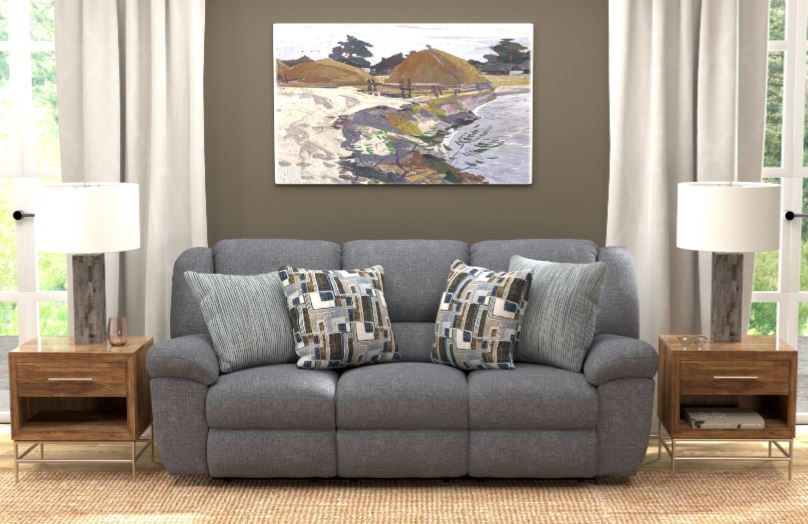
Manual recline covers three designs. A side lever operates the mechanism through a handle on the outside arm. A pull handle sits in a similar position with a strap or loop. Push-back designs recline when you lean back with your body weight. All three require some physical effort, and the lever and handle types require grip strength and a shoulder motion that not everyone finds comfortable.
Power recline replaces that with a motor and actuator driven by a button or touchpad on the inside arm. Many current models add USB charging ports at the controls, and some offer battery packs so the piece can sit away from a wall outlet, which matters in rooms where the only outlet is behind where the sofa needs to go.
Extended Power Features
- Power headrest: Adjusts the head and neck angle independently, which is the feature most people notice immediately, since a fixed headrest that pushes your head forward is a common complaint in reclined positions.
- Power lumbar: Adjusts lower back support, genuinely useful for anyone with back issues and largely ignored by everyone else.
- Independent seat and back adjustment: Lets you recline the back without raising the footrest all the way, which is the position most people actually want while watching television.
The positioning difference is the real argument. Manual mechanisms stop at fixed detents, typically two or three positions. Power mechanisms stop anywhere in their range, so you can find the exact angle that works for reading rather than settling for the closest preset. Over years of daily use, that difference matters more than it sounds in a showroom.
The trade-offs are honest on both sides. Power models need an outlet or a battery pack and add electrical components that can eventually fail, including the motor, the transformer, the switch, and the wiring harness. Manual models have fewer parts to fail but demand physical effort and cannot stop mid-range.
Accessibility often settles the question. For anyone with limited grip strength, shoulder problems, arthritis, or mobility limitations, power recline is not a luxury, it is the difference between using the furniture independently and needing help. Lay-flat and zero-gravity positions extend that further by raising the legs to or above heart level, which relieves pressure on the lower back and helps with circulation and swelling in the legs.
What Happens During a Power Outage
This is the question competitors skip and shoppers ask. If the power goes out with a power reclining sofa fully extended, most models include a manual release that lets you lower the footrest by hand, usually a lever or a strap underneath the seat. Battery backup packs, which are optional on many models, keep the motor working long enough to close the piece normally. Ask specifically which of the two a model has before buying, because being stuck reclined during a summer storm outage is a real inconvenience in a house full of people.
Upholstery Options: Leather, Performance Fabric, and Blends
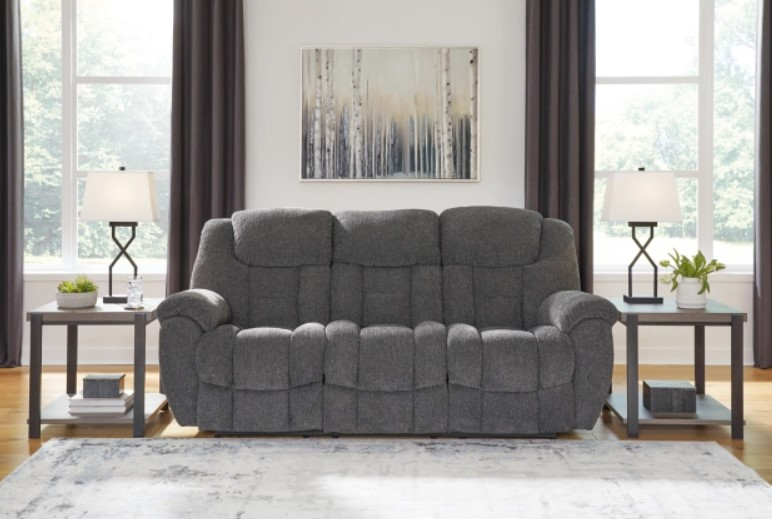
Cover material is where the showroom decision and the ten-year outcome diverge the most, because the material that looks best under showroom lighting is not always the one that survives your household.
- Top grain leather: The upper layer of the hide with the surface sanded and finished. Durable, breathable, and it develops character with age. It costs the most and needs conditioning.
- Split grain leather: The lower layers of the hide, less expensive and less durable, with a surface finish applied.
- Bonded leather: Leather scraps ground and bonded to a backing with polyurethane. It looks like leather at first and peels on high-contact surfaces, usually within a few years.
- Leather match: Genuine leather on the seating and contact surfaces with a matched material on the sides and back. A common and honest way to hit a price point, since you only touch the leather parts anyway.
- Performance polyester and microfiber: Engineered fabrics with stain resistance treatments, tight weaves, and high abrasion resistance.
- Chenille: Soft and warm with a distinctive texture, less resistant to pet claws than a tight weave.
- Faux leather: Fully synthetic, easy to wipe clean, less breathable, and variable in durability by grade.
Abrasion resistance on fabric is measured in double rubs, and higher numbers indicate a fabric that resists wear longer. Cleanability codes tell you what you can safely use: W means water-based cleaners, S means solvent only, W/S means either, and X means vacuum only.
Matching Material to Your Household
- Pets with claws: Tight-weave performance fabric or microfiber resists snagging far better than chenille or loose weaves, and leather shows punctures permanently.
- Young children and spills: Performance fabric with a stain treatment, or leather, which wipes clean immediately.
- Sunny rooms: Both leather and fabric fade, but direct sun is especially hard on leather, drying and cracking it over time.
- Warm rooms and warm sleepers: Leather holds body heat and feels cool at first and warm later, while breathable fabric stays more neutral.
Maintenance is not optional on leather. Condition it every six to twelve months to keep it from drying, and keep it away from heat sources. Fabric needs regular vacuuming, since grit that works into the weave cuts fibers from the inside, and spot cleaning within the limits of the cleanability code.
One wear pattern is worth planning around: the headrest and the arm tops always wear first, because skin oils, hair products, and hand contact concentrate there. On leather, that shows as darkening and eventual finish loss. On fabric, it shows as sheen and matting. Choosing a material that tolerates cleaning, or a model with removable and washable seat and back covers, changes how a reclining sofa looks at year eight far more than the initial fabric grade does.
The Reclining Sofa Brands Known for Comfort and Durability
Brand names carry real information, but less than shoppers expect, because nearly every manufacturer builds across multiple price tiers. Here is what the recognized names are generally known for:
- La-Z-Boy: The name most associated with recliners, known for a wide comfort range and a deep custom fabric program.
- Flexsteel: Built around its blue steel spring seat construction, with a reputation for frame and suspension longevity.
- Southern Motion: A motion furniture specialist with a strong power feature set, including power headrests and lumbar across many models.
- Best Home Furnishings: Known for space-conscious designs and a broad custom cover selection, made in Indiana.
- Catnapper by Jackson: Known for value-oriented motion furniture with heavier-duty options and lay-flat mechanisms.
- Ashley and Signature Design: The largest volume producer in the category, offering accessible pricing across a wide style range.
What to Actually Compare
Warranty terms tell you more about a brand’s confidence than any marketing line:
- Frame coverage: Often limited lifetime on quality pieces, which is a meaningful signal.
- Mechanism coverage: Usually shorter than the frame, and this is the part most likely to need service.
- Foam and cushion coverage: Typically the shortest, often one to five years, since foam is a wear item.
- Upholstery coverage: Usually one year, and often excludes normal wear entirely.
- Transferability: Most warranties cover the original purchaser only, which matters for resale.
- Service handling: Whether claims go through the retailer or directly to the manufacturer determines how painful a repair is.
Domestic versus imported manufacturing affects service more than quality. Domestically built furniture generally has faster parts availability, which matters enormously when a mechanism or motor needs replacement three years in. Imported pieces can be excellent and can also mean a longer wait for a specific part.
The questions that cut through a sales pitch:
- What is the frame made of, and is the hardwood kiln-dried?
- Is the mechanism cycle-tested, and to how many cycles?
- What is the foam density in the seat cushions?
- How long is the mechanism warranty, separately from the frame warranty?
- If the motor fails in year four, who handles the claim and who performs the repair?
A store that answers those five specifically is telling you something. A store that changes the subject is telling you something too.
Sizing, Clearance, and Room Layout for a Reclining Sofa
Every reclining sofa has two footprints, closed and fully reclined, and shoppers plan for the first while living with the second. A standard reclining sofa needs clearance behind it, commonly several inches to a foot, so the back can tilt without hitting the wall. Wall hugger designs, sometimes called wall savers or space savers, slide the seat forward as the back reclines, which lets the piece sit within a few inches of the wall.
Body fit is worth measuring too:
- Seat height: Lower seats are harder to stand up from, which matters more every year.
- Seat depth: Too deep and shorter users cannot reach the back support without a pillow.
- Back height: Taller backs support the head and neck; lower backs look sleeker and support less.
Configuration options change the footprint substantially. Sofa and loveseat sets cover more seating in a rectangular room. Reclining sectionals with a chaise use corner space efficiently but are difficult to rearrange later. Console models add cupholders and storage between two reclining seats, converting a three-seat footprint into two seats. Dual reclining sofas recline at both ends with a stationary center, while triple reclining models put a mechanism in all three seats.
The Measuring Checklist
- Wall space available, measuring the sofa’s overall width plus a few inches on each side.
- Reclined depth, taken from the manufacturer’s fully open specification rather than estimated.
- Wall clearance required behind the piece, or confirmation that the model is a wall hugger.
- Doorway width at the narrowest point of the delivery path, including the storm door if there is one.
- Hallway turns and stairwell landings, measuring both width and the diagonal at each turn.
- Clearance from the fully reclined footrest to the coffee table, at least a foot and a half.
- Walkway clearance around the reclined piece so traffic still flows and doors still open.
Ask whether the piece separates into sections or has removable backs, because that single answer often decides whether a sofa can make it up a narrow staircase to a second-floor family room.
Read More: Best Furniture for a Small Living Rooms: 7 Top Picks | Top Furniture and Mattress Trends to Upgrade Your Home Comfort
Care, Warranty, and Getting the Longest Life From Your Reclining Sofa
Routine care by material is short work. Leather wants dusting, a damp wipe for spills, and conditioning every six to twelve months, kept away from radiators, vents, and direct sun. Fabric wants vacuuming every week or two to lift out grit, prompt spot treatment within the cleanability code, and the same distance from heat and sun.
Mechanism care is mostly about habits:
- Keep the footrest path clear of toys, blankets, and pet beds, since jamming the footrest against an obstruction is how linkages bend.
- Never sit or lean on an extended footrest, which is the leading cause of bent mechanisms and broken frame rails.
- Check for loose bolts and hardware once or twice a year and snug anything that has backed out.
- Close the footrest fully before moving the piece, and lift rather than drag.
Cushion care means rotating and flipping where the design allows, and fluffing fiber-wrapped cushions to redistribute the fill. Some settling is normal in the first few months as foam takes a set. What is not normal is a cushion that bottoms out or a seat that feels different from the others within the first year.
Reading a warranty properly saves arguments later. Limited lifetime on a frame typically means the frame components for as long as the original purchaser owns it, and it usually excludes labor after the first year. Mechanism, foam, and upholstery each carry their own shorter terms. Labor coverage is the detail worth confirming, because a part that ships free still leaves you paying a technician to install it if labor coverage has expired.
Buying from a retailer with local service changes the entire experience. When a motor or mechanism needs replacement, a local store orders the part, sends a technician, and handles the claim. An online-only purchase can mean crating and shipping a sofa or negotiating a repair yourself.
Realistic lifespan by tier: an entry-level reclining sofa in a busy household often shows mechanism wear in three to five years, a mid-tier piece with a hardwood frame and heavier mechanism typically runs seven to ten, and a well-built piece with high-density foam and a cycle-tested mechanism can run fifteen or more. The warning signs that a piece is near the end are a frame that racks or twists when you shift weight, a mechanism that no longer latches closed, foam that has bottomed out across multiple seats, and upholstery separating at the seams.
Read More: Stylish White Bedroom Dressers to Explore | Queen vs King Mattress: Space, Comfort, and Cost Compared
Reclining Sofa Types and Configurations Compared
The table below compares the configurations you will actually be choosing between. Find the row that matches your room constraint first, then work back to the features you want.
| Configuration | How It Operates | Wall Clearance | Position Flexibility | Outlet Needed | Best Fit |
|---|---|---|---|---|---|
| Manual reclining sofa | Lever, handle, or push-back | Several inches to a foot | Two or three fixed stops | No | Budget-conscious households |
| Power reclining sofa | Button or touchpad motor | Several inches to a foot | Infinite within range | Yes, or battery pack | Daily use and long sessions |
| Power with headrest and lumbar | Motor plus independent adjusters | Several inches to a foot | Highest, multiple zones | Yes, or battery pack | Back and neck support needs |
| Reclining sectional | Manual or power by seat | Varies by section | Varies by seat | Depends on model | Large family rooms |
| Wall hugger reclining sofa | Seat slides forward as it reclines | A few inches | Two or three stops, or power | Depends on model | Small living rooms and apartments |
| Sofa with drop-down console | Manual or power, center folds down | Several inches to a foot | Two reclining seats | Depends on model | Movie rooms wanting cupholders |
For a small living room the wall hugger is the clear answer, for a family movie room a power reclining sofa or sectional with a console makes the most sense, and for a household with accessibility needs a power model with an adjustable headrest is the one worth stretching the budget for.
Compared with a stationary sofa, a reclining sofa buys you adjustable comfort and costs you floor space, weight, and mechanical complexity. For a household that watches television together most evenings, that is an easy trade. For a formal living room used twice a year, it is not. Here is the honest accounting on both sides.
Pros
Adjustable comfort and pressure relief
Reclining shifts weight off the lower back and, in lay-flat positions, raises the legs to relieve pressure.
Real accessibility benefits
Power recline lets people with limited grip strength or mobility adjust and stand up independently.
Built-in conveniences
Consoles, cupholders, storage compartments, and USB charging ports keep the essentials within reach.
Everyday family room value
A piece used several hours a day earns its cost per use faster than almost any other furniture purchase.
A wide range of price tiers
The category spans entry-level to heirloom construction, so there is a genuine option at most budgets.
Cons
A much larger reclined footprint
The piece needs wall clearance behind and floor space in front, which limits room arrangements.
Mechanical components that wear
Mechanisms, motors, and switches are moving parts, and moving parts eventually need service.
Significant weight
Steel mechanisms and hardwood frames make these pieces heavy to move, tight to fit through doorways, and awkward to rearrange.
What Northwest Ohio Living Rooms Do to a Reclining Sofa
Housing stock around Toledo shapes this purchase more than most shoppers realize. The mid-century ranches that fill Sylvania, Maumee, Oregon, and the Toledo suburbs typically have living rooms around eleven to thirteen feet wide with a picture window on one long wall and a walkway on the other, which leaves a reclining sofa competing with traffic flow the moment it opens. Older homes in the Old West End, Point Place, and the East Side add narrow doorways, tight stair turns, and second-floor family rooms that a one-piece reclining sofa simply cannot reach. Then there is the basement, which in this part of Ohio is where the real television room usually lives, and basements here run humid in summer and cool in winter with concrete floors that pull moisture. That combination is harder on wood frames and steel mechanisms than any upstairs room, and it is why the frame material question matters more here than the fabric question.
Practical adjustments for homes in this area:
- Measure the reclined depth against the walkway behind your coffee table before anything else, since a thirteen-foot ranch living room runs out of floor before it runs out of wall.
- Ask whether the piece separates or has removable backs if it is going to a second floor or a finished basement, because Toledo’s older stairwells were not built for one-piece motion furniture.
- Choose a wall hugger design when the sofa has to sit against a picture window wall, so the back does not push into the window trim or the blinds as it reclines.
- Keep a reclining sofa off a bare basement slab by using a rug and pad, since concrete transfers moisture and cold directly into a frame and a steel mechanism.
- Run a dehumidifier in a basement family room through the summer, which protects wood frames, foam, and upholstery from the humidity that rolls in off Lake Erie.
- Pull leather pieces back from west-facing picture windows, which get hard afternoon sun in this climate and dry a hide faster than anything else in the room.
- Expect heavy use in shift-work households, common across this area’s manufacturing and healthcare employers, where a sofa may be in use around the clock rather than a few hours each evening.
Top Reclining Sofas Available at Appliance Center
The selections below span brands, manual and power mechanisms, leather-look and fabric covers, and budgets from accessible to feature-loaded, with a matching loveseat included for rooms that need a second piece.
Catnapper® Searsport Buff Power Reclining Sofa with Power Adjustable Headrest
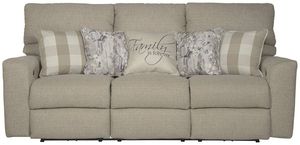
This is the most feature-complete reclining sofa in the group and the one to look at if comfort over long sessions is the priority. Power recline gives you infinite positioning rather than two or three fixed stops, and the power adjustable headrest solves the complaint that ruins many reclining sofas, which is a fixed headrest pushing your head forward when the back goes down. The buff cover reads warm and neutral against most room colors. It suits a family room used every evening and anyone who needs independent adjustment for neck or back comfort.
Top Features
- Power recline: Motorized operation stops at any point in the range, so the position is yours rather than the mechanism’s.
- Power adjustable headrest: Independent head and neck angle, which is the difference between comfortable and tolerable when reclined.
- Buff upholstery: A warm neutral that works with existing furniture rather than dictating the room.
- Full sofa seating: Sized as a primary seating piece for a family room rather than a secondary chair.
Best® Home Furnishings Ellisport Kona Brown Power Space Saver® Sofa
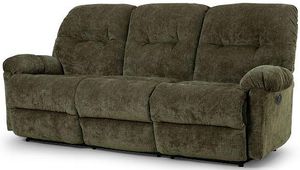
If the clearance section described your living room, this is the answer. The Space Saver design slides the seat forward as the back reclines, so the sofa can sit close to a wall instead of demanding a foot of clearance behind it, which is exactly what an eleven-foot-wide ranch living room needs. Power operation adds infinite positioning on top of that space advantage. Best Home Furnishings builds in Indiana, which generally means better parts availability when service is needed years later. The Kona brown cover hides everyday use well.
Top Features
- Power Space Saver design: Reclines with only a few inches of wall clearance, freeing up the room’s usable floor space.
- Power operation: Infinite positioning within the range rather than fixed detents.
- Kona brown upholstery: A deep neutral that conceals daily wear better than lighter covers.
- Domestically built: Indiana manufacturing generally means shorter waits on replacement parts.
Catnapper® Searsport Metal Power Reclining Loveseat with Power Adjustable Headrest
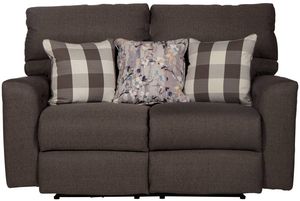
Worth noting up front that this is a loveseat rather than a full sofa, which makes it the companion piece to the Searsport sofa above or a standalone answer for a smaller room. It carries the same power recline and power adjustable headrest, so nothing is given up in features, only in width. The metal-toned cover is a cooler neutral than the buff. It fits a den, an apartment, a bedroom sitting area, or the second wall in a family room where a full sofa would crowd the walkway.
Top Features
- Power recline with power headrest: The same adjustment capability as the full-size sofa in a narrower footprint.
- Two-seat width: Fits rooms and wall runs where a three-seat sofa does not.
- Metal-toned upholstery: A cool neutral that pairs with gray and blue rooms.
- Coordinates with the Searsport sofa: Buy the pair for a matched family room or the loveseat alone for a smaller space.
Catnapper® Montego Linen Lay Flat Reclining Sofa
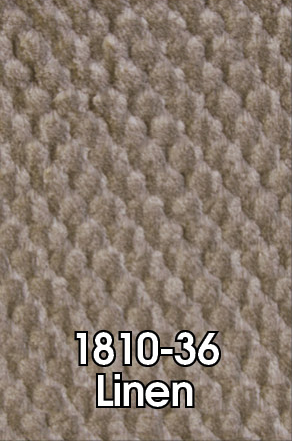
Lay flat is the feature that distinguishes this one, and it is a meaningful difference rather than a marketing term. A lay flat mechanism extends further than a standard recline, bringing the body closer to horizontal and raising the legs enough to take pressure off the lower back. That makes it the choice for napping, for anyone dealing with leg swelling, and for the household member who falls asleep during every movie. The linen cover keeps it light and casual. Confirm the deeper reclined depth against your room before ordering, since lay flat needs more space.
Top Features
- Lay flat mechanism: Extends further than standard recline for near-horizontal rest and leg elevation.
- Linen upholstery: A light, casual cover that brightens a room rather than anchoring it.
- Pressure relief positioning: Raising the legs relieves lower back and circulation pressure during long sessions.
- Full sofa format: Primary seating with the deepest recline in this lineup.
Catnapper® Trifecta Blue Mountain/Smoke Manual Reclining Sofa with Drop Down Table
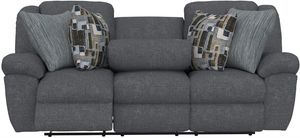
The drop down table in the center is the reason to choose this one. Folded up, it is a third seat. Folded down, it becomes a surface for drinks, remotes, and snacks between two reclining positions, which is exactly the movie room configuration a lot of families are actually trying to build. Manual recline keeps the mechanism simple with no motor, no outlet, and fewer components to service, which some buyers strongly prefer. The two-tone blue mountain and smoke cover gives it more visual interest than the usual neutrals.
Top Features
- Drop down center table: Converts between a third seat and a shared surface for drinks and remotes.
- Manual recline: No motor, no outlet, and fewer electrical components that can fail.
- Two-tone upholstery: Blue mountain and smoke coloring adds character beyond a single flat neutral.
- Movie room configuration: Two reclining ends with a usable center is the layout most families gravitate toward.
Signature Design by Ashley® Foreside Charcoal Manual Reclining Sofa
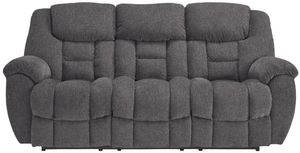
Charcoal is the most forgiving color in a household with children and pets, and that makes this a practical first reclining sofa or a straightforward replacement for one that finally gave out. Manual recline keeps the price accessible and the mechanism simple, with no outlet needed and nothing electrical to fail. Signature Design by Ashley builds at accessible price points across a wide style range, so this fits a starter home, a rental, a basement family room, or a second seating area. Run the showroom inspection from earlier before you buy any piece in this tier.
Top Features
- Charcoal upholstery: The most forgiving color in this lineup for pets, children, and daily traffic.
- Manual recline: Simple operation with no outlet requirement and no electrical components.
- Accessible price tier: A practical entry point into reclining seating or a straightforward replacement.
- Neutral contemporary styling: Works in a basement family room, a first home, or a secondary seating area.
Signature Design by Ashley® Stoneland Chocolate Manual Reclining Sofa
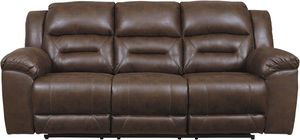
The Stoneland is the traditional-leaning option here, with the pillow-top arms and generous proportions that read as classic living room furniture rather than contemporary. Chocolate is a warm mid-tone that hides everyday use nearly as well as charcoal while feeling less severe in a room with wood trim, which describes a great many older Toledo homes. Manual recline again keeps things simple and affordable. It suits a household that wants comfortable, familiar seating without motors, ports, or a control panel on the arm.
Top Features
- Traditional styling: Pillow-top arms and full proportions that suit rooms with wood trim and classic furnishings.
- Chocolate upholstery: A warm mid-tone that conceals wear while staying softer than charcoal.
- Manual recline: Straightforward mechanical operation with nothing to plug in.
- Comfort-first proportions: Generous seating for a household that prioritizes sitting comfort over slim styling.
Choosing a Reclining Sofa That Delivers Comfort and Durability
Frame construction and mechanism quality are what actually determine whether a reclining sofa lasts three years or fifteen, the choice between power and manual should follow how your household will genuinely use it rather than which sounds more advanced, and upholstery should be chosen for the pets, children, and sunlight in your specific room. Get those three right and the rest is style and budget.
Come sit in them at Appliance Center. There is no substitute for opening and closing a footrest yourself, feeling whether a frame flexes under your weight, and comparing seat height and depth against your own body before you commit. Our furniture specialists can walk you through construction and warranty differences model by model, our own crews handle professional delivery and setup, and when a mechanism eventually needs attention our service department is right here in northwest Ohio rather than at the other end of a return shipping label. Shop reclining sofas online or visit the showroom, and bring your room measurements with you.
Frequently Asked Questions about Reclining Sofa Brands and Durability
Brands with a long-standing reputation for motion furniture construction, including Flexsteel, La-Z-Boy, Southern Motion, and Best Home Furnishings, generally build the frames and mechanisms that hold up longest, though every brand builds across multiple price tiers. The more reliable predictor than the brand name is the specific construction, meaning a kiln-dried hardwood frame, a heavy-gauge cycle-tested mechanism, high-density foam, and a warranty that covers the mechanism separately from the frame.
A power reclining sofa is better for daily use, long sessions, and anyone with limited grip strength or mobility, because it stops at any position in its range and requires no physical effort. A manual reclining sofa is better when simplicity, lower price, and fewer components matter most, since it has no motor, transformer, or wiring to fail and does not need an outlet nearby.
A standard reclining sofa typically needs several inches to about a foot of clearance behind it so the back can tilt as the footrest extends. A wall hugger or space saver design slides the seat forward as it reclines and can usually sit within a few inches of the wall, which is the better choice for small living rooms, apartments, and any wall with a window or trim behind the sofa.
An entry-level reclining sofa in a busy household often shows mechanism wear within three to five years, a mid-tier piece with a hardwood frame typically runs seven to ten years, and a well-built model with a cycle-tested mechanism and high-density foam can last fifteen years or more. Keeping the footrest path clear, never sitting on an extended footrest, and checking hardware once or twice a year extends any of those figures.
Performance fabric is usually better for homes with pets and young children, since tight weaves resist claws and stain treatments handle spills, while top grain leather is better for households that want a material that wipes clean instantly and develops character over decades with conditioning. Avoid bonded leather on a reclining sofa regardless of household, because it peels on exactly the high-contact seat and arm surfaces a reclining piece uses most.
Look at the coverage terms separately for frame, mechanism, foam, and upholstery, since a limited lifetime frame warranty often sits alongside a much shorter mechanism warranty and an even shorter foam warranty. Confirm whether labor is covered and for how long, whether the warranty transfers to a new owner, and specifically who handles a service claim, because a retailer that manages parts and technicians locally saves you the hardest part of the process.
Why Trust Appliance Center?
Appliance Center is a trusted destination for quality home solutions, offering top appliances, mattresses, and furniture to help you upgrade every room in your home. Our commitment is simple: deliver reliable products, competitive pricing, and exceptional customer service.
Shop Furniture & Mattresses at Appliance Center
At Appliance Center, the customer always comes first. Our knowledgeable team is ready to help you find everything you need for your home with ease and confidence.